get in touch
Zero-Click Search: What It Really Means for Your Business

If your website traffic from Google looks flat, you’re not imagining it. Search is changing. One of the biggest shifts is the rise of zero-click results, where people get answers directly in Google without visiting a website.
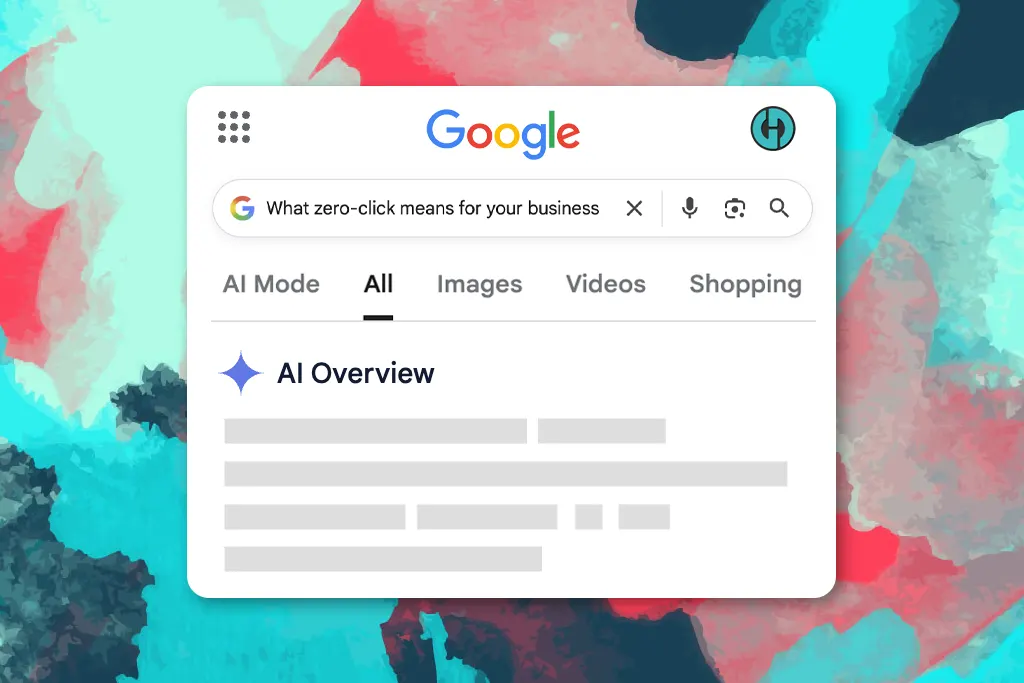
Zero-click search is simple. Someone searches on Google, gets the answer on the results page, and doesn’t click through to any website. That answer might be a featured snippet, a Google Maps result, a product panel, a knowledge panel, or an AI-style summary that pulls information together for the user.
And it’s not a small thing. Recent research suggests that around 60% of Google searches now end without a click to a website, as more answers are shown directly on the results page.
Why your traffic might look flat
So, is zero-click a problem? Sometimes. But not always.
It’s a bigger issue if your website relies on lots of visitors reading articles, scrolling pages, and clicking around. If Google can answer a quick question directly, fewer people need to visit the page. That can make it feel like SEO has stopped working, because the traffic graph doesn’t move in the way it used to.
But for most service businesses, zero-click isn’t the end of the world. It’s more of a change in where the value shows up. People still discover companies through search. They still compare options. They still look for reassurance. It’s just that more of that “early research” happens on the results page.
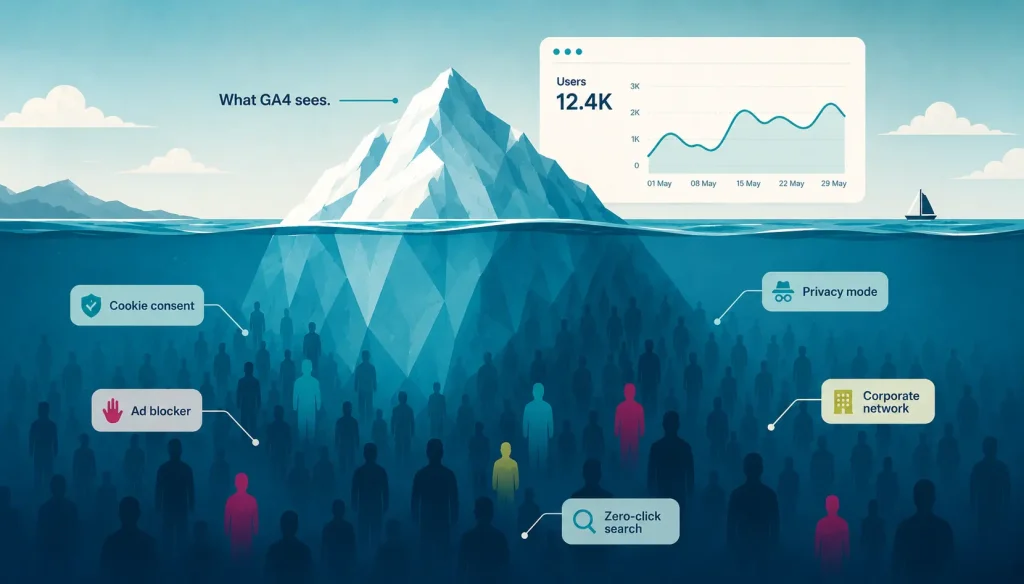
That’s why Analytics can be misleading. You can be showing up more often, and being seen by more people, while website sessions stay flat. It doesn’t mean nothing is happening. It means the measurement is different.
The focus shifts slightly. It’s not only “get the click”. It’s also “be present in the answer”, and then make it easy for people to take the next step when they’re ready.
How to win in a zero-click world
So how do you still get people to your website? By giving them a reason to click.
Quick answers are most likely to be zero-click. Deeper, more useful content still earns visits. People click when they want confidence, not just information. They click to see proof, examples, pricing guidance, case studies, FAQs, comparisons, or a clear process. They click when they’re thinking, “Right, this looks like the one, I just need to check.”
This is where strong service pages matter more than ever. If your website clearly explains what you do, who it’s for, what it costs (even if it’s a range), and what happens next, it becomes the place people go when they’re ready to act. And that’s the traffic that actually counts.
It’s also worth mentioning local search. For many businesses, the most valuable zero-click actions happen in Google Maps. Someone might read your reviews, check your opening times, and call you straight from the results. That’s still a win, even if your website doesn’t get the visit.
So does it matter if fewer people visit your website? Sometimes less than you’d think. Your website is still crucial, but it’s often no longer the first touch. Increasingly, it’s where people go once they already trust you enough to take a closer look.
The takeaway is straightforward. Zero-click doesn’t mean SEO is dead. It means search results are doing more of the “answering”, and your website needs to do more of the “convincing”. Get the basics right, stay clear and consistent, and you’ll still win the enquiries that matter.